
The West Cork Mines: Part Two, the Cornish in the Beara Peninsula
© Dr Sharron P. Schwartz
Not to be reproduced without permission
Taking advantage of a good weather window during what has been a particularly cold and wet spring, we packed up our Land Rover camper and headed to West Cork for a mining expedition. All of the mines in the three peninsulas (Beara, Sheep’s Head and Mizen) that jut out into the Atlantic Ocean like the fingers of an outstretched hand, were managed or promoted by Cornishmen.
Only rivalled by County Wicklow in terms of the importance of its metalliferous mines, at its zenith in the mid-nineteenth century, West Cork sustained a mining workforce of some 1,200-1,500 people. This region of Ireland contains some superlative industrial archaeology in the shape of several Cornish-type engine houses (including the best-preserved example of a purpose-built man engine house in the world) and a remarkable density of mid-nineteenth century circular powder houses, which are extremely rare worldwide.
We caught our first view of Allihies, about 20km west of Castletown-Berehaven, just as the sun was sliding towards the horizon. The impressive Skellig Islands, a UNESCO World Heritage Site made famous by the Star Wars franchise, rose from the mercury-grey surface of the Atlantic like jagged shards of glass, adding to the end-of-the-world feeling of this remote corner of Ireland.
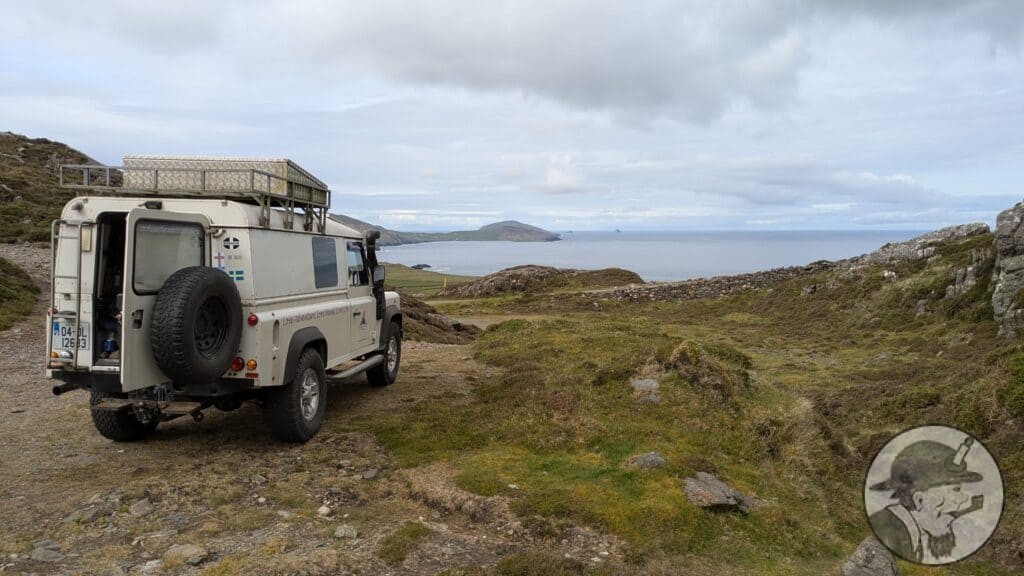
We parked our Land Rover in a secluded level spot just below the iconic Cornish engine house at Mountain Mine, which offered glorious views towards the Atlantic.
The distinctive “kee-ow” calls of choughs up at the engine house seemed somehow appropriate, as the chough is Cornwall’s national bird, and appears on our coat of arms!
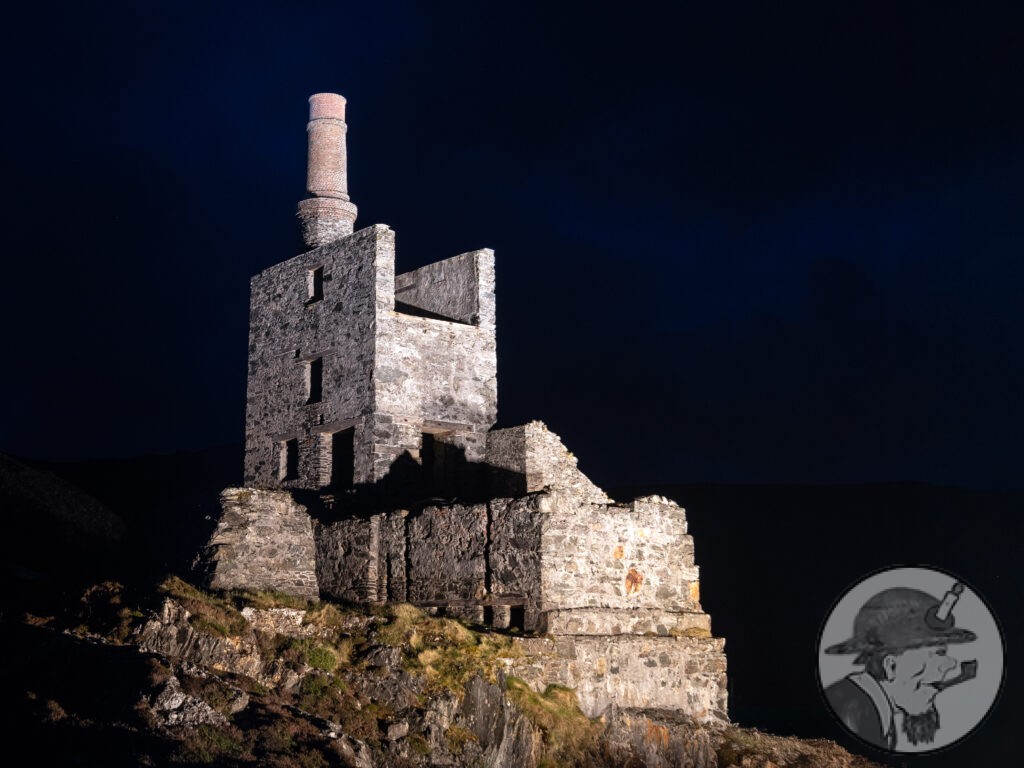
As darkness fell, we were delighted to see that since our last visit to Allihies in 2012, the Mountain Mine engine house has been illuminated at night. It was a truly dramatic sight.
The Berehaven Mines (Dooneen, Mountain (North), Caminches, Kealogue, Tragh Na Mban and Coom), are undoubtedly among the most well-known in Ireland.
Firstly, due to their association with Daphne du Maurier, whose 1943 novel Hungry Hill, a family saga of epic proportions which traces the fortunes of ‘Copper John’ Brodrick and his mine, Hungry Hill, based on the Irish ancestors of her friend, Christopher Puxley.
Secondly, because these mines have some of the best-preserved and discernibly Cornish mining remains in the whole island of Ireland. Many of these features can be visited on the way-marked Allihies Copper Mine Trail, which connects the mine sites across the valley.
Accounts vary as to who discovered these mines around 1810, with many sources citing Colonel Hall of Exeter, who arrived in the region with a regiment of soldiers from Cornwall and Devon, to prevent the landing of a French Armada. Some of those men were formerly miners and recognised the tell-tale sign of copper mineralisation.
Hall was certainly active in mining in many parts of SW Ireland, but it is likely that there had been some working of the mineralised outcrops hereabouts in antiquity, as at nearby Mount Gabriel, and that this fact was known to others.
What is indisputable is that the history of these mines is inextricably connected to the Puxley family, of English origin but with Galway connections. John Lavallin Puxley (1772-1856) formed the Allihies Mining Company on the cost book system in 1812, using the well-tried Cornish labour system of tribute, tutwork and day labour.
From the inception of the company, Puxley employed Cornish labour, especially for working in bad and running ground, making Allihies one of the earliest areas to attract Cornish labour outside of Britain.
Their passage and a suit of underground clothes were paid by the company, and in the early days, most of them took ship from Portreath, arriving at Bantry.
From the inception of the company, the majority of the mineworkers were Irish, a mix of local people, and experienced men from elsewhere in Ireland (such as the Wicklow mines).
The Cornish mineworkers were paid in English pounds rather than Irish pounds, and their wages were higher, making it unfeasible to employ more than necessary, particularly when local men could be hired and trained as mineworkers. For example, in the spring of 1846 the Cork Examiner contained an advertisement that 100 miners and surface labourers were required for the mines, where ‘great wages are given’.
A succession of Cornish mine captains and a small number of mineworkers occupying skilled positions such as engineers, timbermen and ore dressers, were present at Allihies until 1884 (when the mines closed).
It’s fair to say though, that the Cornish punched above their weight in terms of their lasting impact in this region.
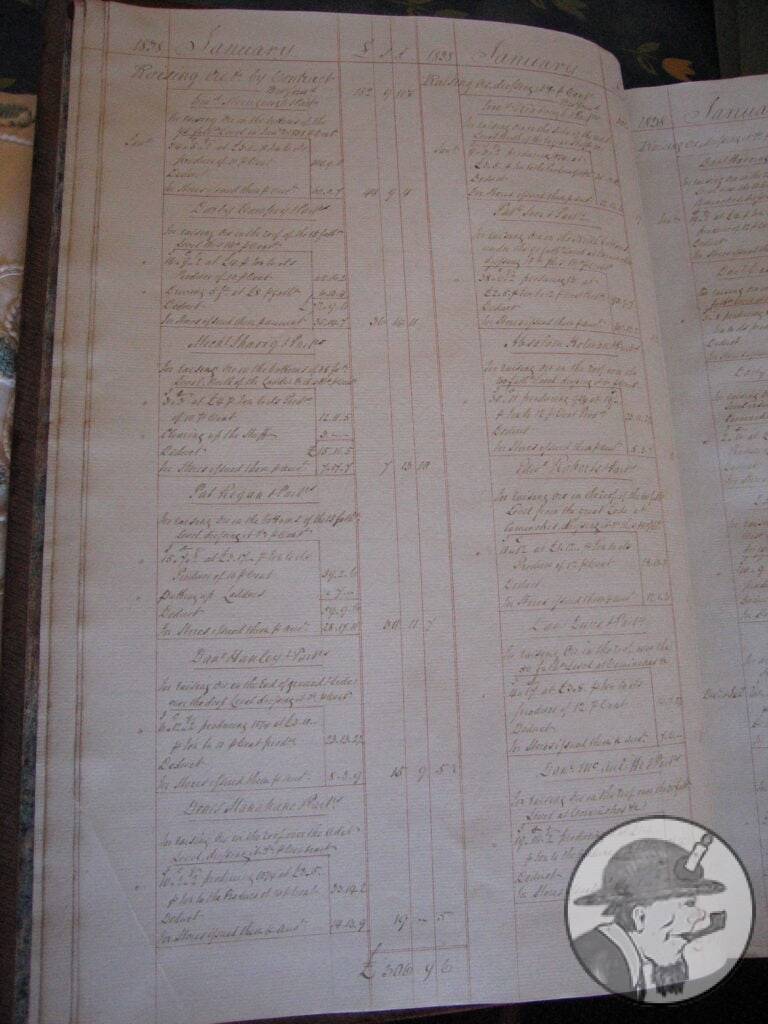
Around 20 years ago, I led a project to trace the migration patterns of the Cornish mineworkers at Allihies, using a number of the surviving Cost Books (preserved at the Allihies Museum, see below). From these, I extracted their names and occupations and then attempted to link their names with other records.
The page depicted (from January 1838), records a tribute pare headed by Cornishman, Absalom Holman (born in 1808), from Hoe Downs in Gwinear.
In common with early migration patterns that have emerged elsewhere, such as Real del Monte and Pachuca in Mexico, the migration flow from Cornwall to Béara was locally specific. In this instance, it was mainly from the St Agnes district, which accounted for around 65 percent of migrants with a known parish of departure.
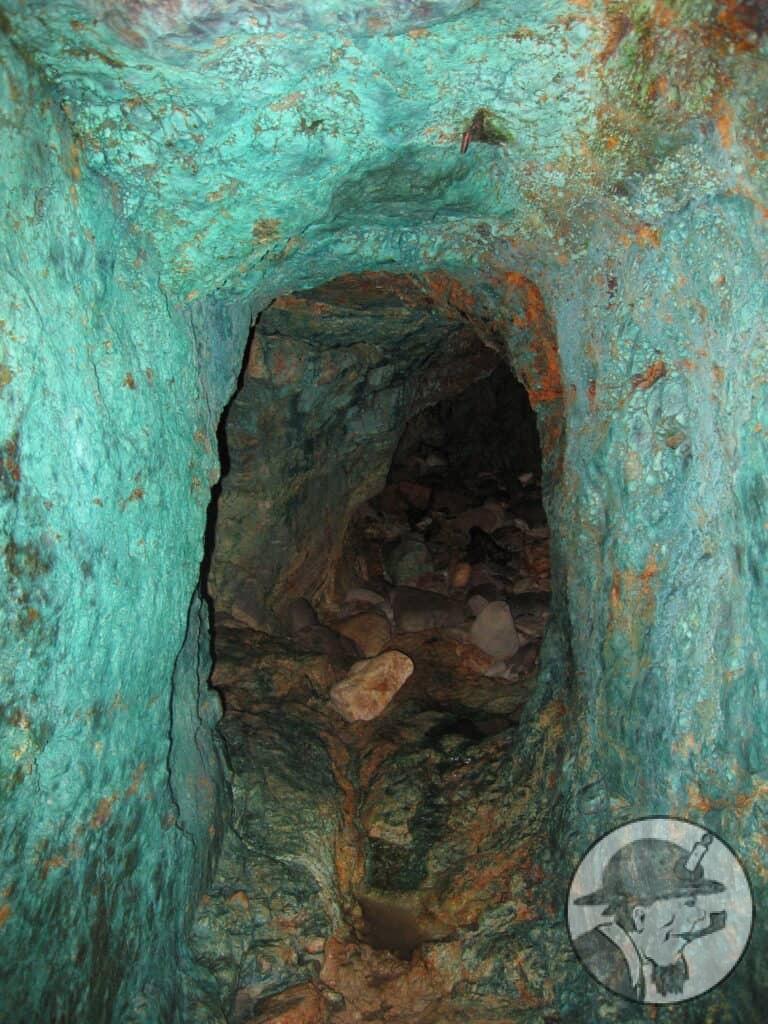
The migration flow appears to have begun in 1812 with the Captaincy of Edward Nettle, born in 1781 in St Agnes, who commenced work at Dooneen, where a quartz vein showing the tell-tale green signs of secondary copper staining extends into the sea, and may still be seen today.
Two names dominate Allihies mining: Cornishmen, Captains John Richards Reed and Richard Martin. Reed (and his wife Maria Nankivel, who joined him) were also natives of St Agnes. Reed’s brothers later joined him, three of whom were Mine Captains and one a timberman.
Further west in Cornwall, an arc of parishes also accounted for some of the movement: Captain Richard Martin was from Sithney (he married Grace Bawden at Helston prior to his migration to Allihies, where his family later joined him); a family of blacksmiths named Trewhela hailed from nearby Crowan parish; and the Holmans came from the parish next door – Gwinear.
The Cornish tended to maintain a distance from their mainly Irish-speaking Catholic colleagues. Marriage, therefore, within the Cornish (Protestant) community was not uncommon. For example, Allihies-born Lavinia Martin married Simon Moyle, probably from the Helston area, in the Diocese of Cork and Ross in 1830. In 1857 at Castletown Berehaven, Captain Matthew Silvester married Mary Woolcock, the eldest daughter of Edward Woolcock, all of whom were natives of St Agnes.
Others however, did marry out. Thomas Trewhela (born at Crowan in 1824), the youngest son of head smith, Richard Trewhela, married Lucinda O’Sullivan at Killaconenagh in 1845. The couple eventually migrated to Chile via Swansea.
In 1813, the Mountain (or North) Mine, was started at the insistence of Puxley himself, who overrode Nettle’s instinct to pass on the exploitation of what, to him, seemed to be unkindly surface appearances. However, the quartz outcrop proved to be rich in copper at depth. It was open casted, Nettle was fired, and more people flooded into Allihies as the mine cut rich.
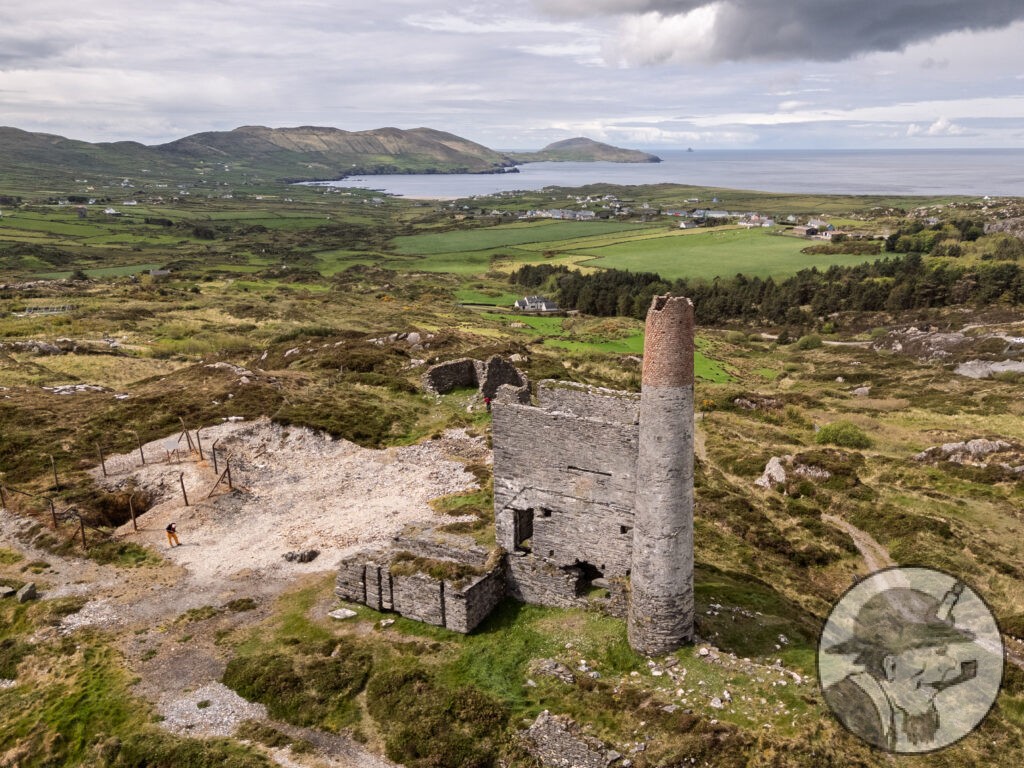
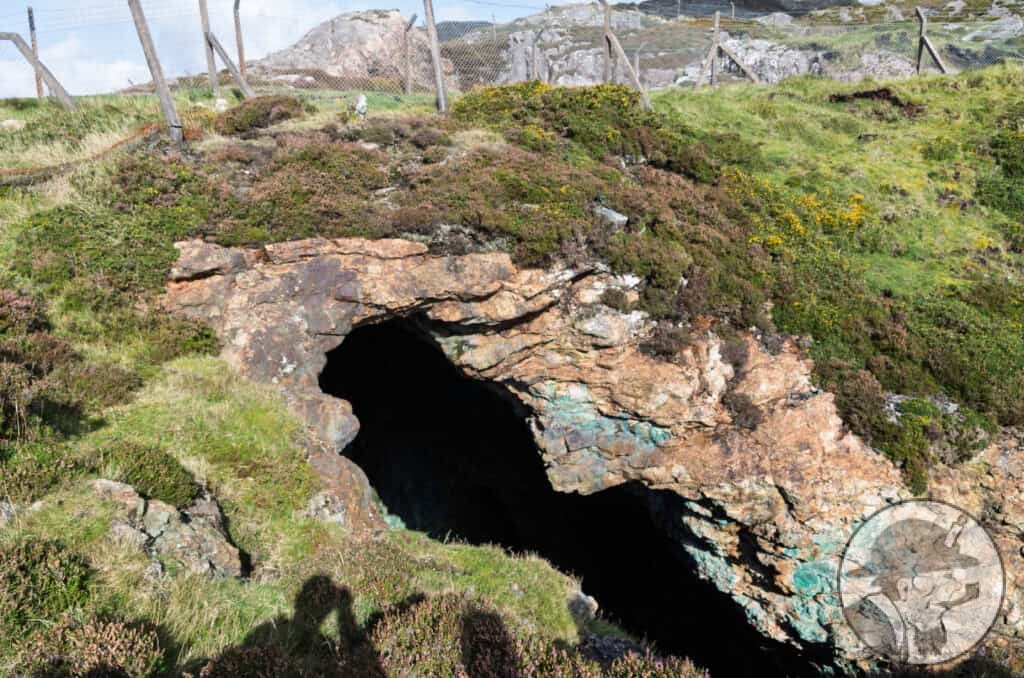
The hillside at Mountain Mine is riddled with dramatic gunnises sporting colours that look as if they have spilled from a paint box. The whole area around the engine house is fenced off for safety reasons.
Ore was shipped from Ballydonegan near Allihies and transported to Swansea for smelting. Puxley was well acquainted with Cornishman, Henry Bath (1776–1844), a Quaker and metals merchant of Swansea, South Wales, and the founder of Henry Bath & Son Ltd., that purchased Allihies ores.
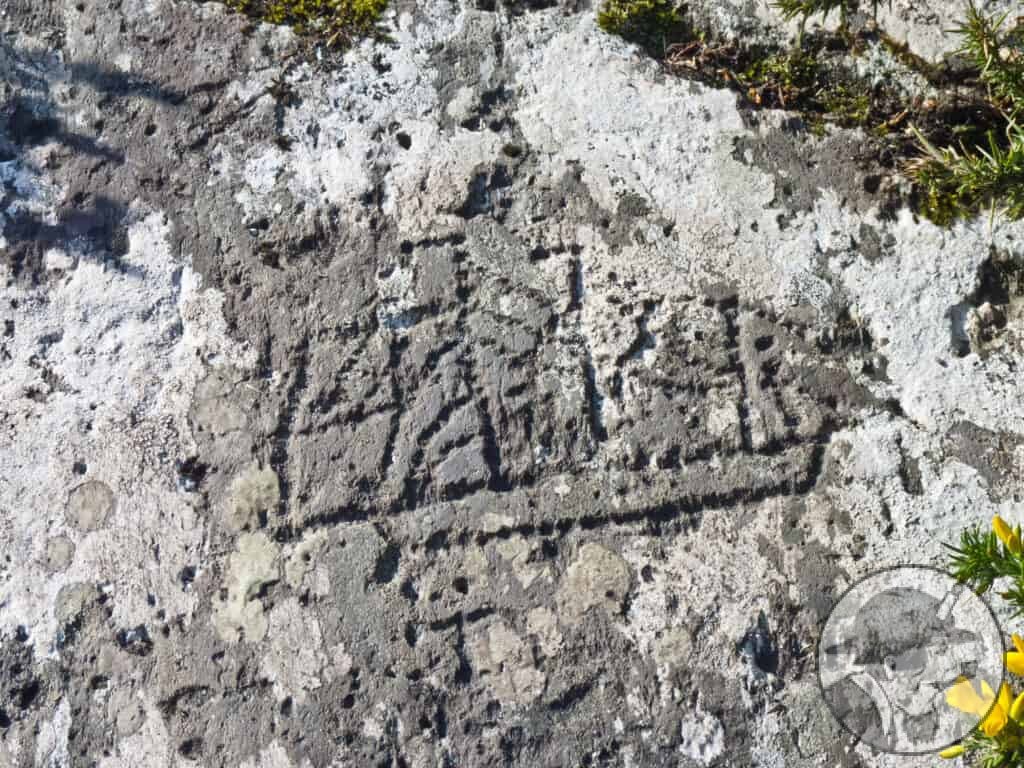
Close to the Mountain Mine we spied two examples of sailing vessels carved into the rock. Maybe these are depictions of ships that carried the copper ore from Ballydonegan?
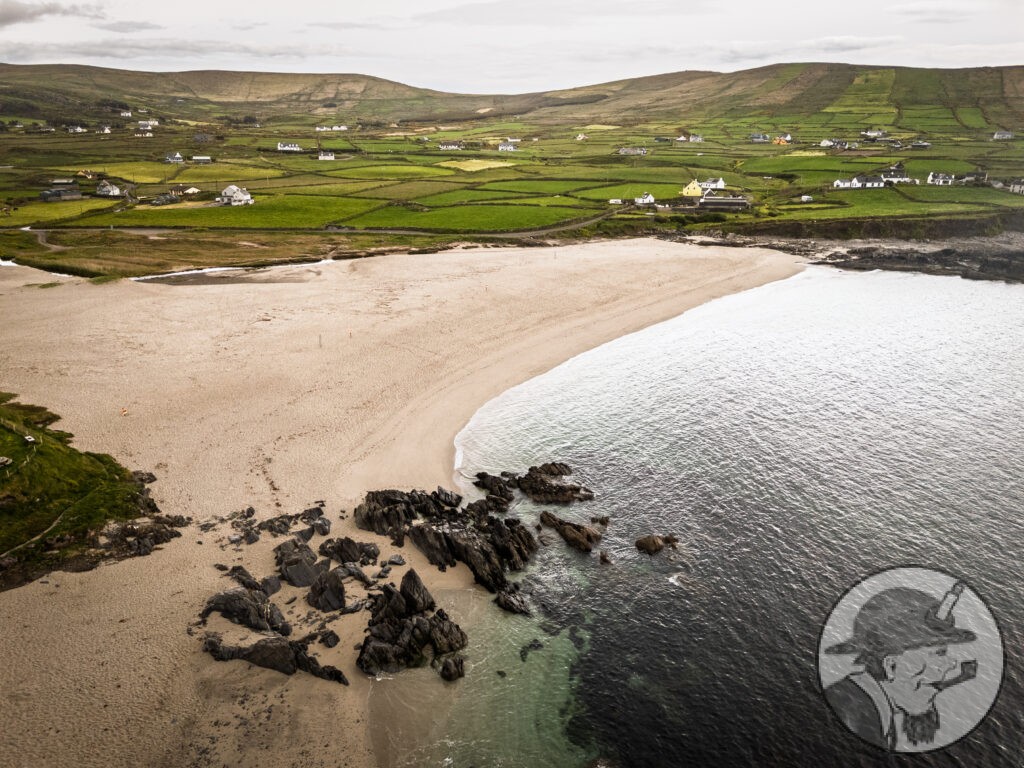
Ballydonegan sports a large, sandy beach. This is not natural, but the waste quartz sands from the water powered crushing mills inland that were washed into the Ballydonegan River and out to sea.
Up to three hundred thousand tons of copper ore are believed to have been shipped from Ballydonegan to Swansea for smelting. Remains of stone-built coal bunkers (the coal was imported from south Wales to fuel the steam engines) and a jetty are visible.
Conditions in Allihies were poor, diets bad, and ailments such as tuberculosis (consumption) were common. Frequent potato shortages were ameliorated by the company which had them (and Indian corn) shipped in and sold at supposedly ‘reasonable rates’ to prevent the stoppage of the mines.
Even so, the truck system was widespread, which benefitted the company rather than the workforce. Local people hard hit during the famine years, which coincided with a period of falling prosperity for the company, causing the closure of the Kealogue Mine in 1847, were forced to eat seaweed. Men earning just one shilling a day deserted the mines for the government-sponsored soup kitchens and Board of Work schemes.
Drunkenness also blighted the area, causing squalid misery. Indeed, whiskey was an exceedingly popular item among the labouring classes of the district, with one report in 1835 stating:
“Immediately after pay-day, the neighbourhood of the mines exhibits the most disgraceful scenes of drunkenness; and there appears to be a total deficiency in the establishment of moral discipline.”
To curb such outrages, Captain Mark Reed implemented a rule that any Cornishman caught going into a public house would face instant dismissal.
There was a serious outbreak of cholera at Allihies in November 1832. As the death toll began to increase, the frightened mineworkers refused to go to work. Captain Richard Martin wrote:
“In order to keep the [steam] engines at work, I was obliged to drive the carts with coals through the village as the drivers were in dread to pass the doors where the sickness was.”
To stop the spread of cholera, it was common at that time to burn down the houses in which it occurred, which caused considerable angst among the poor. A month later, the outbreak was contained, but labour discontent rippled through the area, causing strikes at Allihies.
Captain Martin gives a flavour of the precarious life led by the small Cornish enclave in Allhies, writing of the difficult task they had to perform “among a set of evil minded men who would not care to take away our lives”:
“You that are on the other side of the water are not aware of what state this country is in at the present moment, it is nothing short of open rebellion and I fear the end of it will be bad on the Protestant side, we shall have very little chance among them as our number is little.”
The company took measures to protect the powder house, which is still extant, sited well away from any vital buildings. Its construction is unusual, in that it is a double-walled structure and much larger than the round powder houses found on other West Cork mines.
The strike eventually petered out, but it was by no means the last, as events at Kealogue in 1864 proved.
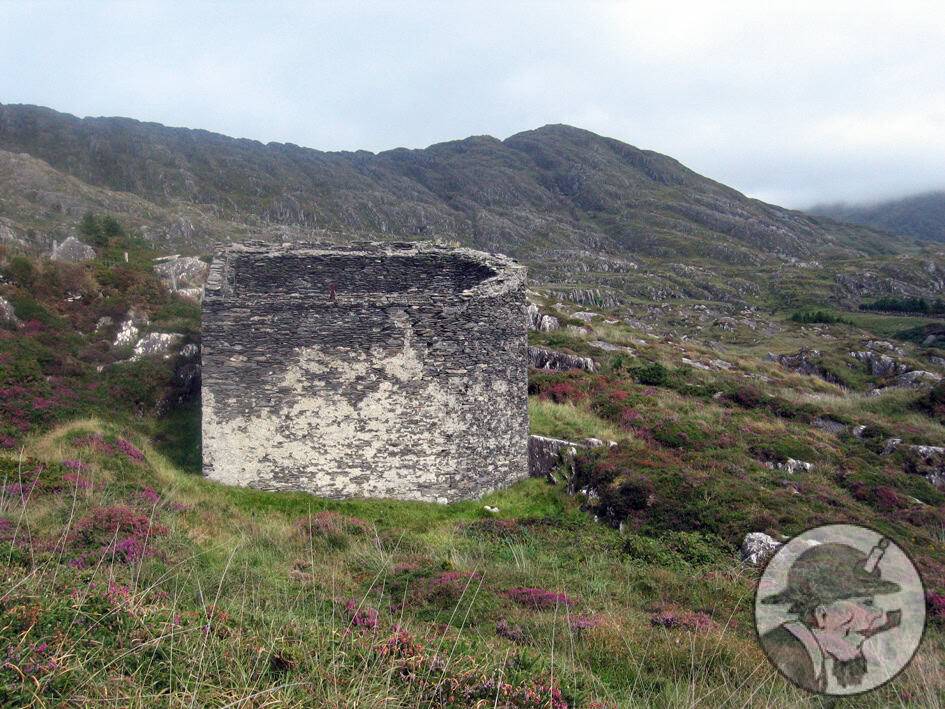
In common with all mines, those at Allihies produced large quantities of dust. But that at Allihies was particularly injurious, being comprised of quartz (silica), the same mineral which later in the century ravaged the lungs of Cornishmen working in the Transvaal gold mines of South Africa.
Due to poor ventilation, the Allihies miners inhaled this, leading to silicosis (phthisis), which was compounded by consumption in the damp, Irish climate. The result was that underground workers often died in their late twenties or thirties.
In this, the Cornish were not exempted. In 1832, Richard Trewhela, a sixteen-year-old blacksmith, had been treated for over twelve months for phthisis. At Allihies, Captains John and Mark Reed operated five forges at a time, the majority of which were subterranean. Young Trewhela paid the price for this ‘innovation’, which Captain Mark Reed took back to Wheal Vor on his return to Cornwall.
The following extract by Frederick Roper, who inspected the mines in 1841 for the Children’s Commission published in 1842, tells us something of life at the ‘well managed and conducted mines’ which gave employment to around 800 people:
“The Allihies mines are in a very isolated situation, and the persons there seldom extend their journeys beyond Castletown, about six miles [as the crow flies]. I had great difficulty in understanding them, or making myself understood. Indeed, I could not have got on at all without an interpreter. They mostly spoke Irish only, and many of them understood but little English.
The people of these mines are very poor, poorly clad, and seldom have more than two meals a day, those of potatoes, with but seldom, milk. Of course, some of the miners live better but, generally speaking they barely exist…”
The Census figures of 1841 reveal that 2,012 people, or over one-third of the population of the parish, lived in the main copper mining area. In spite of the Great Famine of the 1840s, the population of Cloan Townland increased from 691 to 1088 people, who were living in 126 houses by 1851.
This was an average of more than eight people per house. According to the Census, the vast majority of the houses were thatched, one-roomed cob and stonewalled cabins, which was also remarked on in a newspaper report of 1853 (see below), along with the dirty, sloppy appearance of the village, disfigured by mud and refuse from the shafts and dressing floors.
The English-speaking Cornish formed a small, discrete community, mainly accommodated in a purpose-built village of two-storey dwellings between the Mountain and Coom Mines, which was far superior to the cabins inhabited by the Irish miners. Moreover, the houses were well-maintained by the company and whitewashed very year, which caused some resentment among the native population.
The remains of the village, sited on private property, have unfortunately been largely erased since I first visited the mines over 20 years ago. The most prominent extant building is the two-storey schoolhouse, part of a wall of which is still standing.
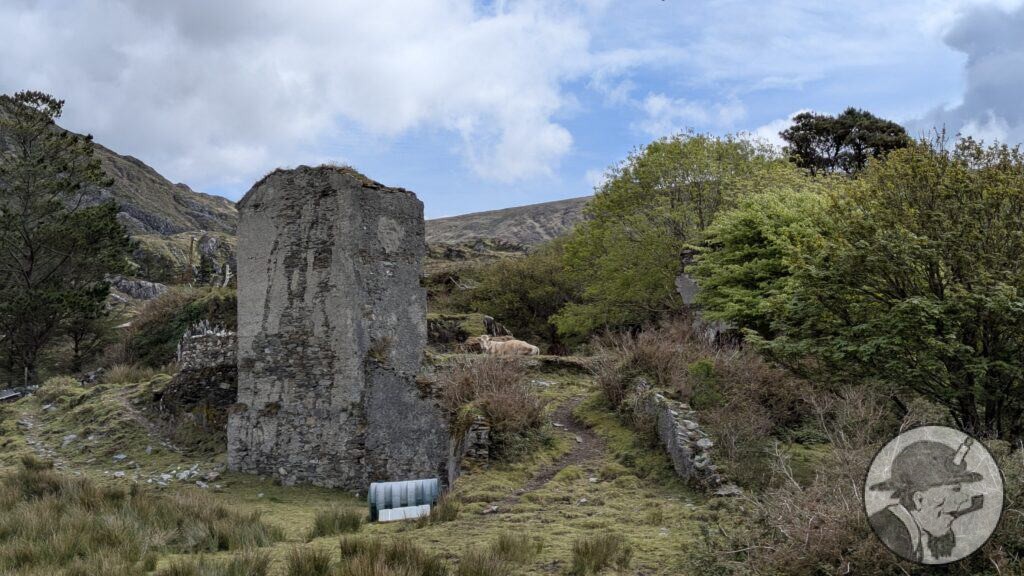
This was built in 1836 to accommodate the Cornish children (the sons and daughters mainly of five Cornish mine captains). The upstairs room served as a Methodist Chapel, and Roper noted that a Wesleyan preacher attended on Sundays in the schoolroom for the benefit of the Methodist Cornish, hence the building being locally dubbed the ‘Preaching House’.
By 1846, a permanent Wesleyan minister, the Rev. Frederick Elliott (1817-1902), arrived and was lodging with Captain Martin’s wife. He married one of the daughters of Captain John Reed the following year at the Union Church of Berehaven.
That the Cornish Wesleyan faith was strictly adhered to at Allihies can be glimpsed in what Puxley penned in response to a scandalous newspaper report, published in the Cork Constitution in 1853.
This described Allihies as a “wretched, filthy, squalid and repulsive looking village”. It claimed, among other things, that the water powered mills were kept constantly at work throughout every Sabbath. Puxley was enraged and responded accordingly:
“There are in the mine seven mine captains all of whom but one are of the Wesleyan Methodist persuasion; the other a staunch Protestant. The former, I believe, hold the strict observance as one of the most binding of their tenant… I should have soon have expected the Captains to propose blowing up the mine altogether as keeping the crushing mills going on the Sabbath.”
Roper also noted the presence of the day school, on the principal of the national school, but stated that this was frequented only by the children of the mechanics and better class of miners and not by any of the children who worked in the mines.
With widespread poverty, it is no surprise to learn that most children in Allihies did not even receive a hedge school education in the early 1800s. Roper noted:
“Many of the young people of whom I made enquiries could neither read nor write, or had even been to school. Many of the parents said it was as much as they could do and sometimes more, to provide food for their families.”
Captain John Reed’s house, built in the mid-1830s, has met the same fate as most of the Cornish village. It was demolished by a local landowner. Enclosed within a walled garden, the two-storey house with a yard contained stables, a potato house and a linhay. It was well-furnished by the company and was sited at the foot of the Mountain Mine near the head of the village.
With the exception of the Wesleyan meeting room above the school house, there was no purpose built religious provision in the village until the mid-1840s. Roper observed “But with trifling exceptions, the miners and workpeople here are Roman Catholics. There is a chapel about two miles from the mines”.
The Catholic chapel referred to was at Cahermore, and people from the Allihies side of the parish walked along Bóthar an Aifrinn (the Mass Road), an old road over the hill to Cahermore.
In 1845, a neat Protestant church under the control of the Rector of Castletown was erected at the bottom of the village, presumably replacing the Wesleyan meeting room above the school house. No sooner was it built, than the Catholics constructed St. Michael’s Chapel in the middle of the village. The Protestant church, never as well attended as the Catholic chapel (which is still open), has now been converted into a museum and heritage centre.
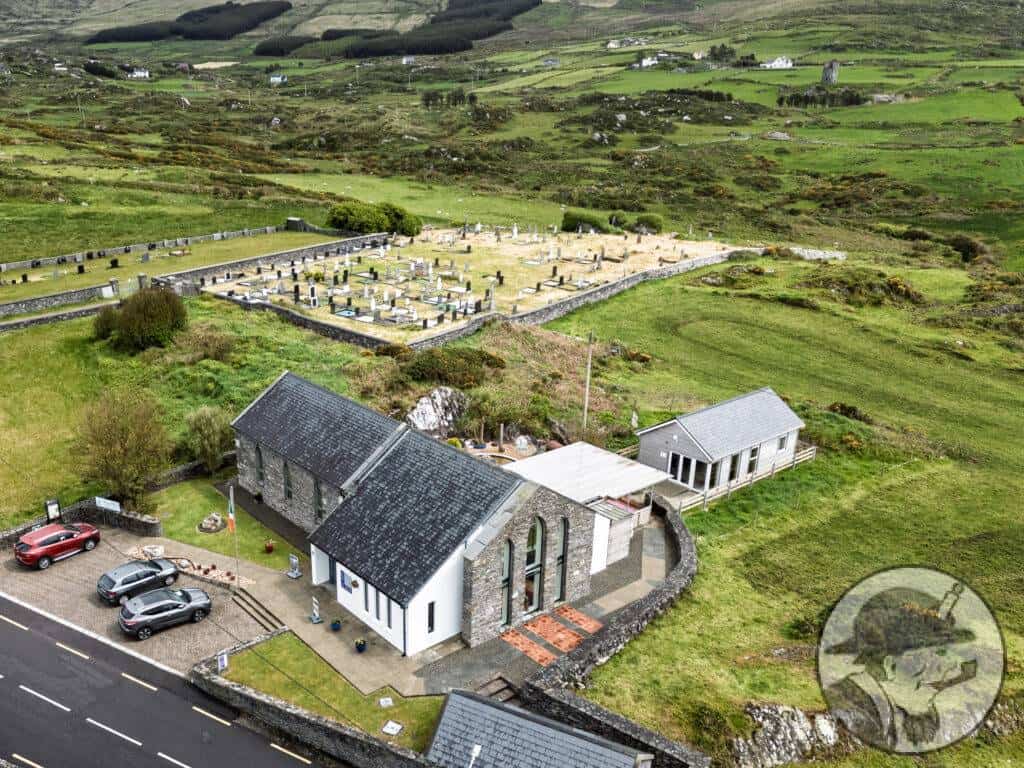
This church was rescued by a group of local people who, in 1993, launched the Parish Cooperative and set about fundraising to renovate it as a base from which to tell the story of the village, the mines, and its people.
The ruined chapel and surrounding land was donated to the Cooperative by brothers, Tommy and Willie Hodges, Cornish descendants, whose family had long been associated with Allihies.
I visited the Museum back in 2005 when it was being fitted out. A grant from the Millennium Fund enabled it to open to great acclaim in 2007. It contains interesting models and exhibitions related to Cornish high-pressure steam technology, widely utilised on the mines, and some of the area’s rich social history.
In the garden are some industrial archaeological exhibits, including sections of cast iron main that lifted water from the shafts.
John Lavallin Puxley died in 1856 and the mines passed to his grandson, John Simon Lavallin Puxley, who appeared not to have had any interest in the mines he had inherited. Following his death in 1860, the mine passed his brother, Henry Lavillin Puxley.
Production at the mine reached an all-time high in 1863 when 8,358 tons of copper ore was sold. However, discontent by the workforce over varying work practices at the different mines (which included resentment of the Cornish who commanded higher wages and more favourable working conditions), culminated in a series of strikes in the 1860s.
However, the report in the West Briton in May 1865, penned by someone calling themselves ‘An Eyewitness’ suggested that at least some of the Cornish were viewed with great respect and affection by their Irish colleagues in ‘one of the most isolated corners of our Green Isle’. Indeed Captain Mark Reed related how he found them ‘perfectly tractable’.
In this case, the writer referred to Captain John Richards Reed, born at Allihies in 1822, who, following the death of his father, had managed the mines as the Head Agent for 25 years, during which time he cared for both widows and orphans:
“On leaving the home of his childhood recently, the miners refused to work and determined they would accompany him on part of the journey. All classes and ages felt his departure acutely; scarcely a dry eye was to be seen in the crowd; the horse was taken from his vehicle which was drawn by the men for miles, and the scene at parting defied description, all striving with tears streaming their faces, to get to kiss his hand. They parted pouring blessings on his head; and he, on his part, feeling it the greatest honour could be conferred on him, to be esteemed ‘the poor man’s friend’”.
Reed had left the company following the strike of 1864, during which he had clashed with Captain Henry Pascoe over the difference in the hours of work at the Mountain and Kealogue Mines, managed by Cornish captains Ham and James Reed. Men at the latter mine worked 33 percent less hours than their counterparts in the Mountain Mine, which Pascoe had formerly managed, assisted by Captains Martin and Daniel.
When he was given overall charge of underground operations, Pascoe instituted the same working hours at Kealogue, and the men struck. Although fiercely resisted by John Richards Reed and the Kealogue mine captains, Pascoe had the backing of Puxley and he prevailed. The strike was ended, Reed quit the mines for Bristol, and Pascoe was lambasted in a popular ballad. In 1871, Reed was resident in the Isle of Wight, working as a steel merchant. He died there in 1889.
Coupled with the need for ever deepening shafts that unfortunately combined with declining copper prices (following the collapse of financial giants, Overend and Gurney in 1866), made the mines less profitable and prompted Puxley to sell them in 1868 to the Mining Company of Ireland.
The mines changed hands that year amid a scandal, to the Berehaven Mining Co. Ltd., which re-opened Dooneen Mine, developed Coom Mine, opened a new mine named Tragh na Mban near Kealogue Mine, and continued operations at Mountain Mine.
But the mines continued to lose money despite cost-saving measures such as dispensing with steam power in favour of water power, and constant calls were made on the shareholders.
The mines closed in 1884 prompting a large emigration from the area to mines overseas, particularly those of Butte Montana, and Michigan in the USA. The Cornish community, never large to begin with, virtually vanished. Only a few people of Cornish descent, including the Hodges, continued to reside at Allihies.
Sporadic activity at the mines in the late nineteenth and twentieth centuries was undertaken by the Allihies Copper Mines Ltd (1917-1926) The British Non-Ferrous Metal Corporation (1928-1930), and the Canadian-owned Emerald Island Mining Company (1956-1962), but all these ventures were financial failures.
The Puxley’s Berehaven Mines were as well-equipped and mechanised as any in nineteenth-century Cornwall, and with the exception of the Avoca Mines in Wicklow, probably the best example of the Industrial Revolution in the Irish metalliferous mining industry.
In 1853, there were seven steam engines at work. These were cast at the great Cornish foundries of Harvey & Co. Hayle and also at the Cornish-owned and operated Neath Abbey Ironworks near Swansea.
A 36-inch cylinder engine, manufactured by Harvey & Co. was the first Cornish engine to be erected; at Dooneen Mine in 1823. Today the base of stone-built chimney and the footprint of the engine survive, along with a nearby reservoir that contained water to steam the boilers.
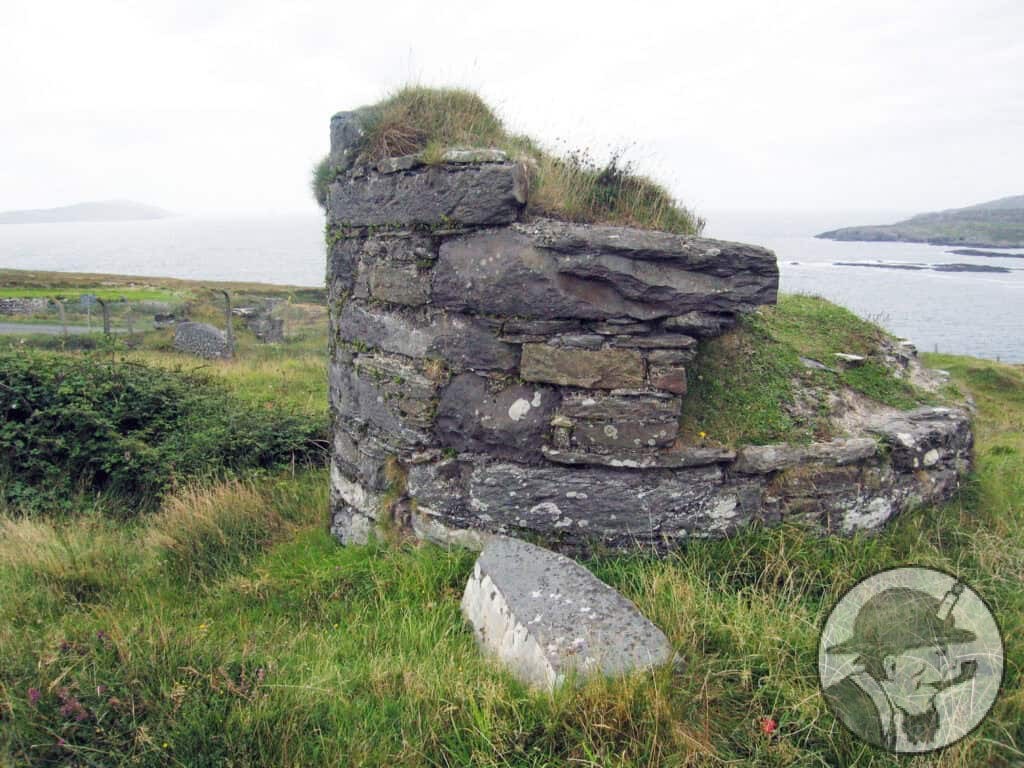
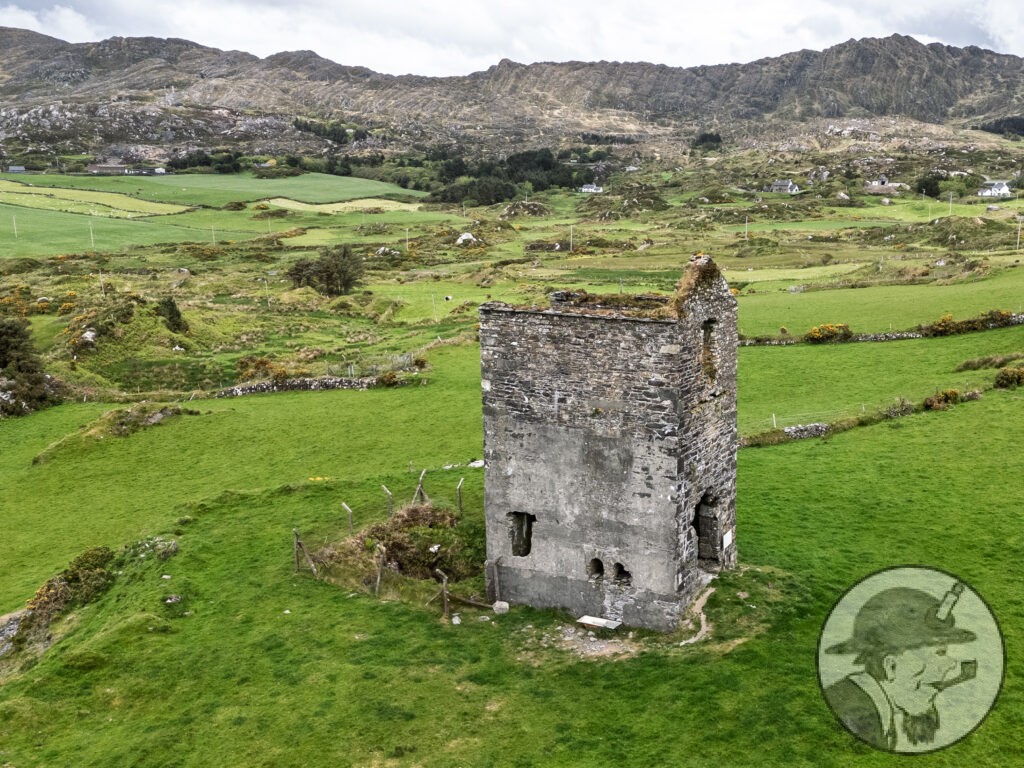
There were another three engines on the Kealogue mine sett. Today, the house that accommodated a 52-inch engine on Puxley’s Shaft is the only extant example.
A further two were erected at Caminches Mine (a 36-inch pumping engine procured from Ross Island Mine in 1829 and an 18-inch winding engine manufactured by Neath Abbey), neither of which have survived.
Three were erected on the Mountain Mine (a 30-inch stamping engine manufactured at Neath Abbey Iron Co. in 1831) and a 30-inch pumping engine also manufactured by Neath Abbey, the house of which has collapsed into its shaft.
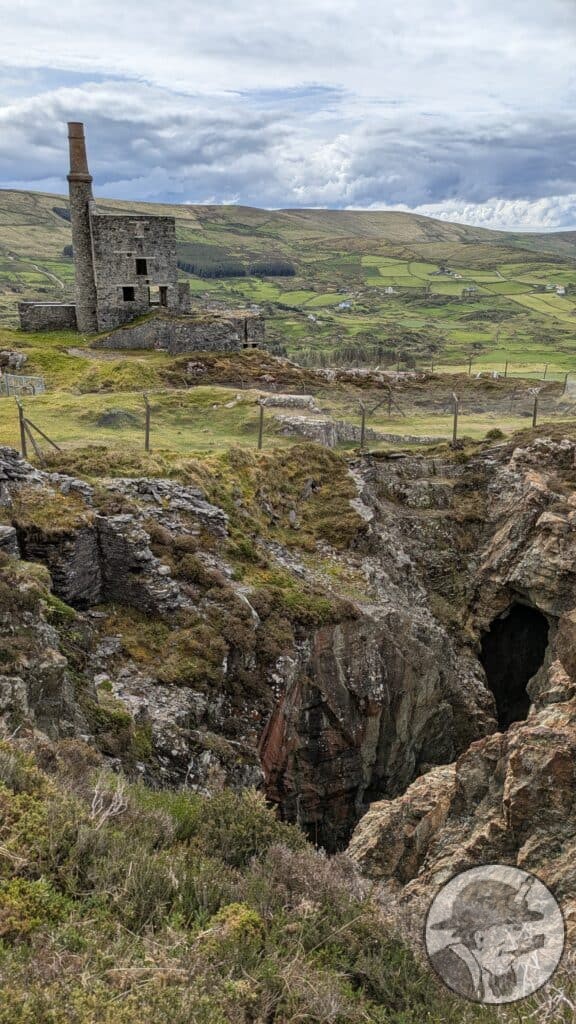
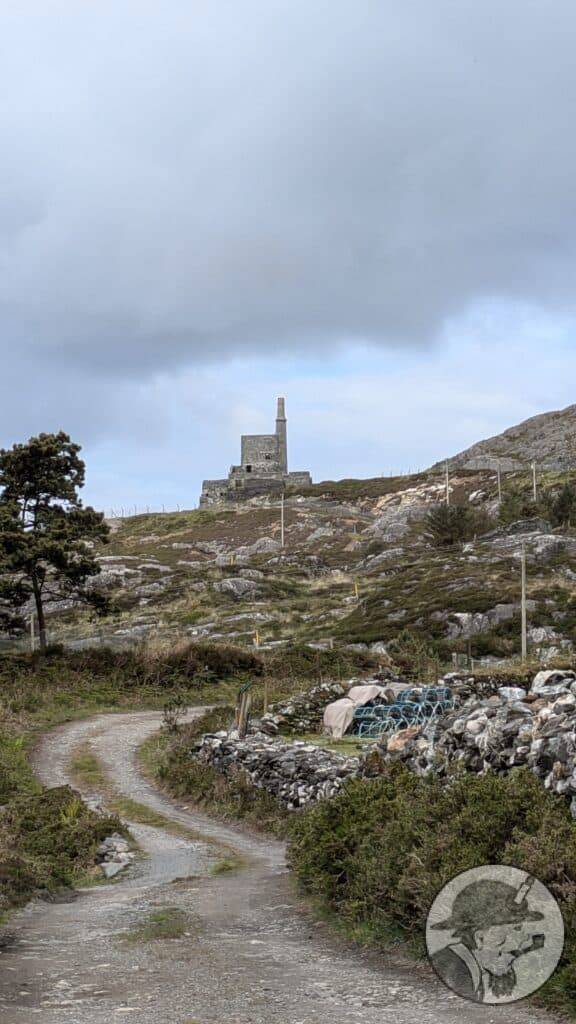
The third was a rotative 32-inch cylinder beam engine, erected in 1862, which served a dual purpose: as a winding engine as well as a man engine. Complete with its boiler house and coal bunker, this engine house is the jewel in the crown of Irish industrial archaeology and absolutely screams Cornwall to anyone who visits this far flung corner of Ireland.
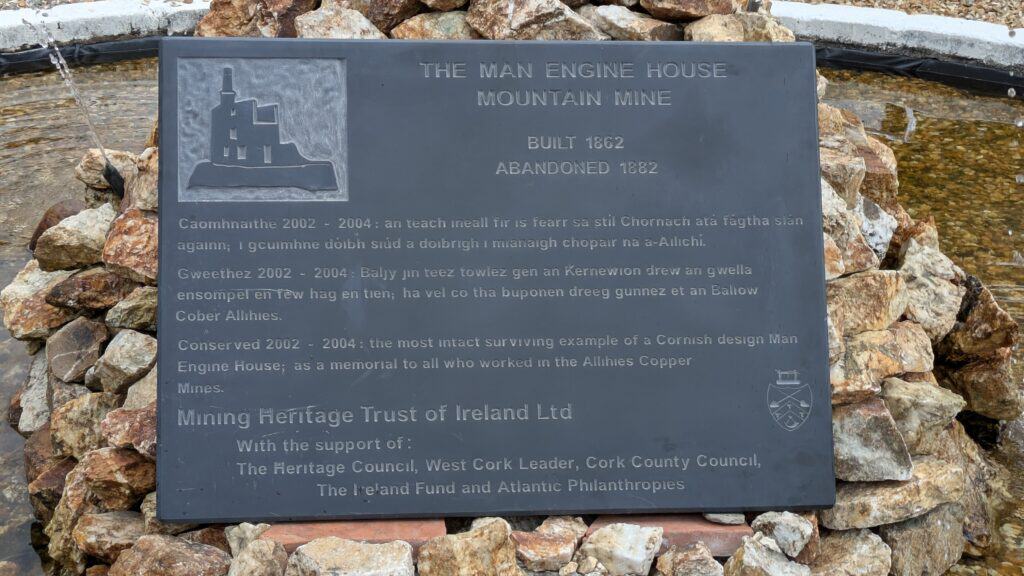
Following substantial financial support from the Heritage Council and other agencies in 2000, the Mining Heritage Trust of Ireland (MHTI) entered into a partnership with shareholders of Cloan townland, to conserve what is the only surviving example of a purpose built Cornish-design man engine house anywhere in the world. And that despite its very exposed position and lack of maintenance since the mine closed in 1882.
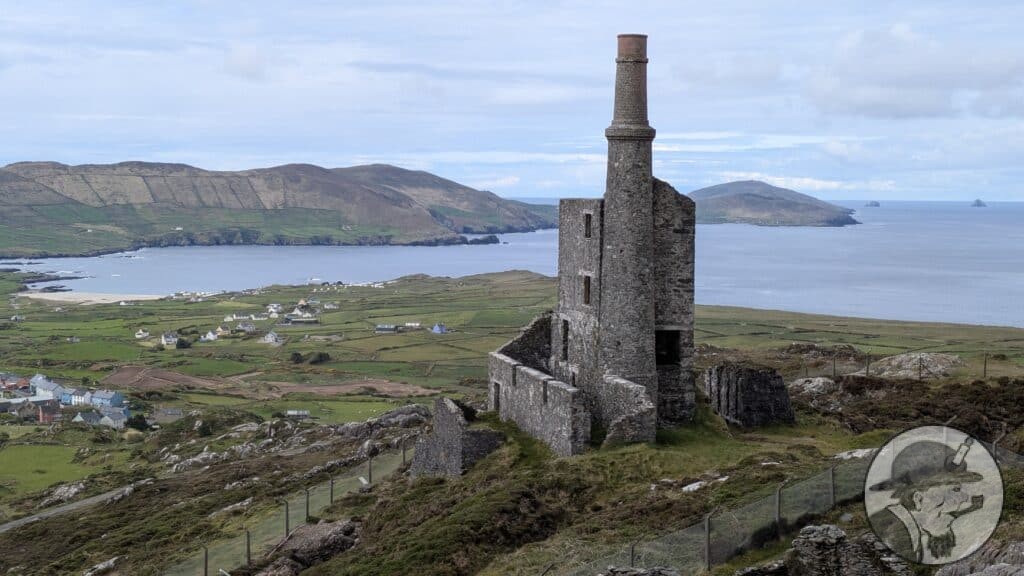
Phase one of a three-stage conservation programme was completed in late 2002, with phase two and three undertaken in 2003. It is somewhat fitting that the conservation work was undertaken by a team of specialist builders and stonemasons from Darrock and Brown Ltd. of Cornwall.
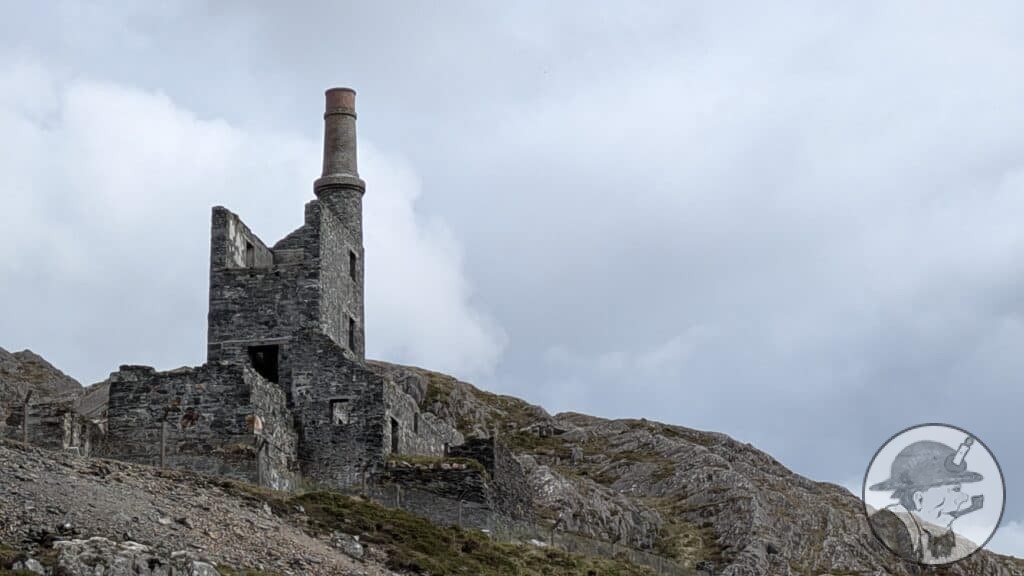
The finished conservation project and some of the underground mine workings were featured in a TV programme ‘Townlands’, entitled Beyond the Dark Mountain, on RTÉ One in 2005.
There is limited access to the man engine house which is fenced around due to the danger posed by a number of gunnises and open shafts. A commemorative plaque to celebrate the conservation project, unveiled in 2005 in three languages (Irish, Cornish and English), is now on display at the Allihies Mine Museum. I was privileged to have organised the Cornish translation for the plaque.
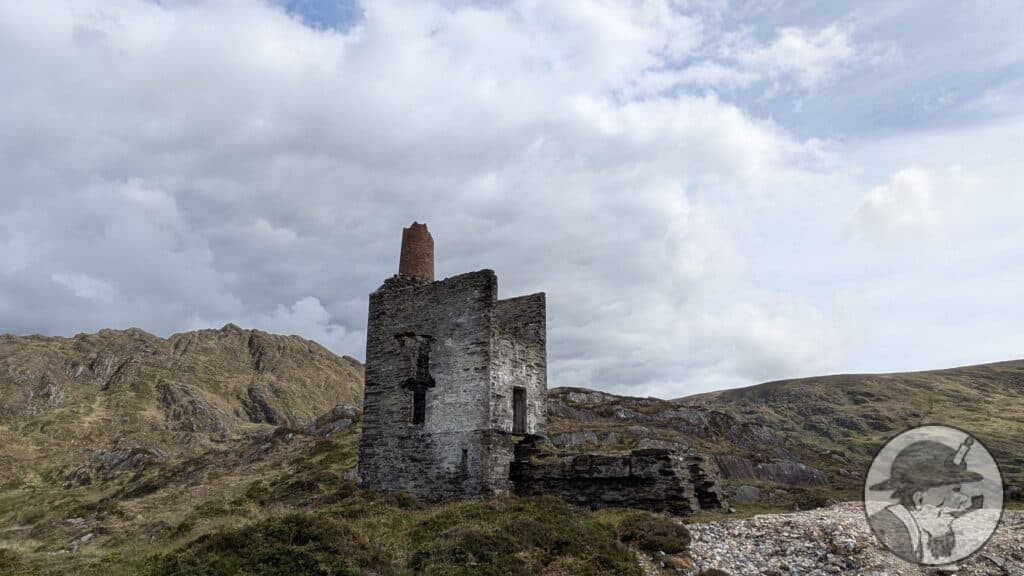
A 28-inch cylinder whim engine was erected on Bewley’s Shaft at nearby Coom Mine, the house of which is also quintessentially Cornish.
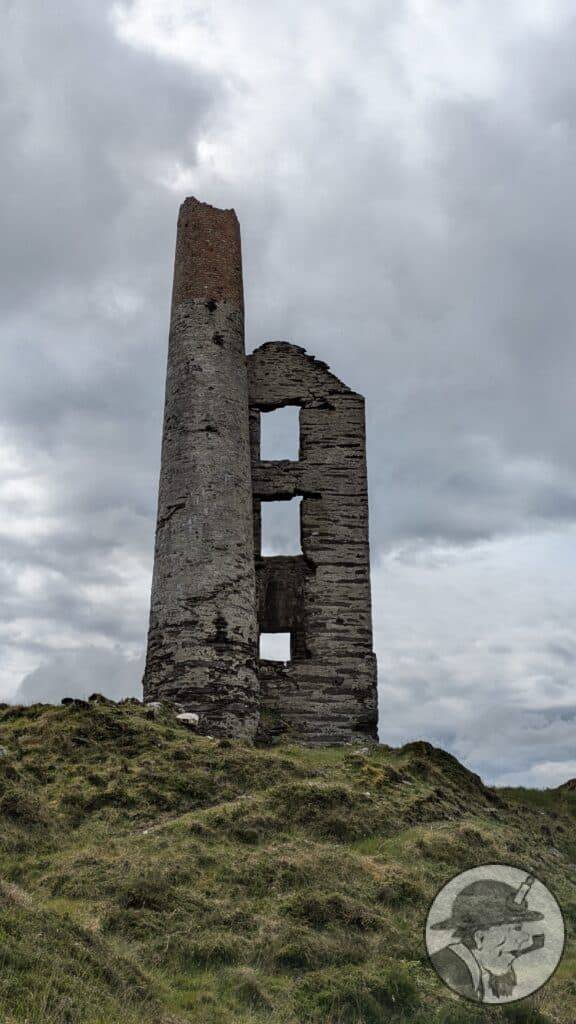
The cylinder bedstone is still intact inside this winding engine house which has sadly not been consolidated. The wooden lintels above the windows have been robbed and the remining courses of the brick-built chimney are badly spalled.
A group of ruinous mine buildings and a reservoir are sited close by.
It was then time to leave the Beara Peninsula, but not before visiting Dunboy House, the former seat of the Puxley Family, built on the shores of Bantry Bay.
I last visited here in 2012, when the property, which had been gutted by fire, was being renovated by PJ Hegarty as a 6* luxury hotel and spa. This included an extension of buildings behind the Victorian mansion, which I considered to be rather out of place and quite frankly hideous.
The developers seemed to have run into financial difficulties, for the building remained unfinished. In 2022 it was supposedly on the market for €2.5m, and was being acquired by Oakmount, the company of Dublin developer, Paddy McKillen Jr.
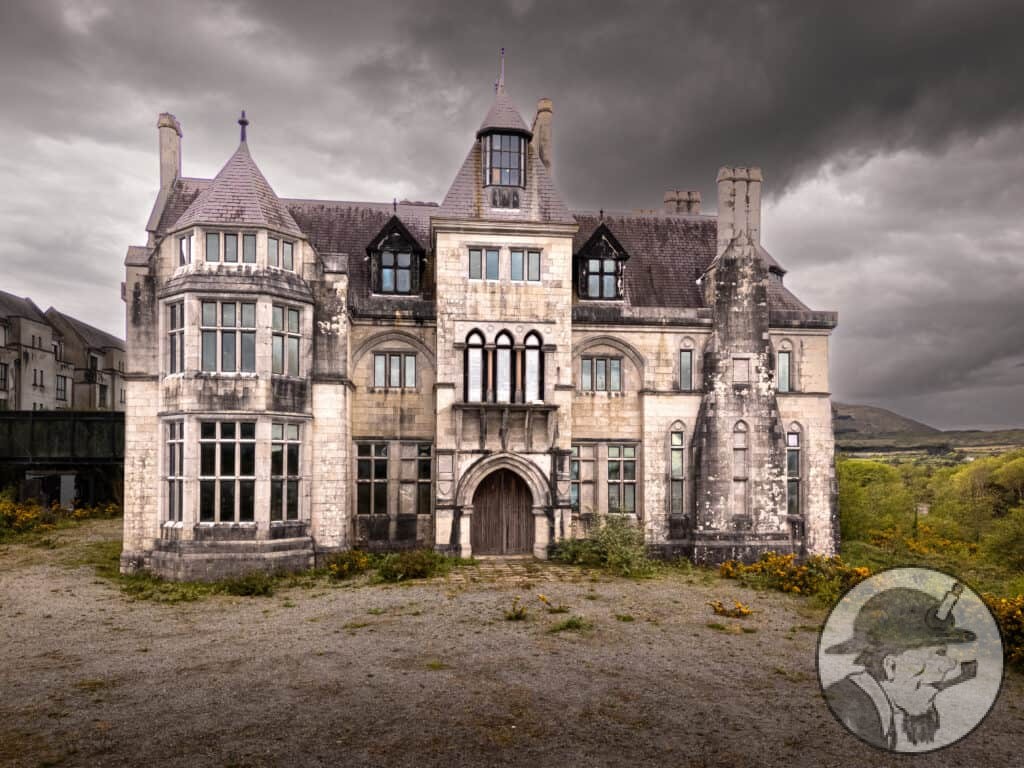
Clearly nothing has been done in the intervening years, and this grand historic property is currently marooned behind rusting fences amid a sea of dwarf willow, gorse and brambles. The appallingly bad extension to the rear has not fared well, and is looking decidedly dilapidated.
The roofless Dunboy House looked better when I first visited it in 2005, when it was a timeless, majestic wonder. A proposed 6* resort now appears to be a 6* elephant. What a shame.
With that, we departed the Beara Peninsula for our next destination, the mines of the Mizen Peninsula, covered in part three of this blog.
The West Cork Mines: Part Two, the Cornish in the Beara Peninsula
Dr Sharron Schwartz
Specialist in Cornish mining migration and transnational communities