
La Ola! Mexico’s ‘Little Cornwall’
and the Cradle of Football:
Cornish Miners and Football in Mexico
© Dr Sharron P. Schwartz
Not to be reproduced without permission
From 11 June — 19 July 2026, the 23rd FIFA World Cup will be hosted jointly by Canada, Mexico and the United States. Mexico will host games at stadiums in Mexico City, Guadalajara and Guadalupe and will become the first and only nation to host the World Cup three times, having held it in 1970 and 1986. Fútbol enjoys a huge following in Mexico which popularised the Mexican Wave during the 1986 World Cup. But who knows that ‘Los Ingleses’ (The English) in the mining communities in the Comarca Minera de Hidalgo played no small part in its spread throughout the country? The city of Pachuca de Soto, home to Club de Fútbol Pachuca ‘Los Tuzos’ (the gophers), competes in Liga MX, the top division of Mexican football, and prides itself on being the spiritual home of the beautiful game. However, when we look at the names of Los Ingleses involved in the early popularisation of fútbol in the Comarca Minera de Hidalgo, we can see that most of them are not English at all…
A Cradle of Fútbol
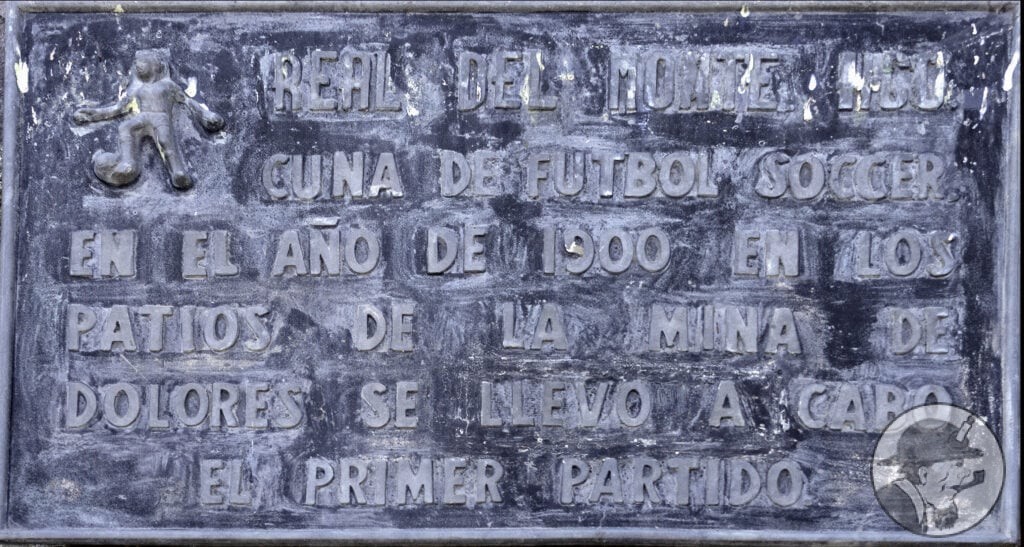
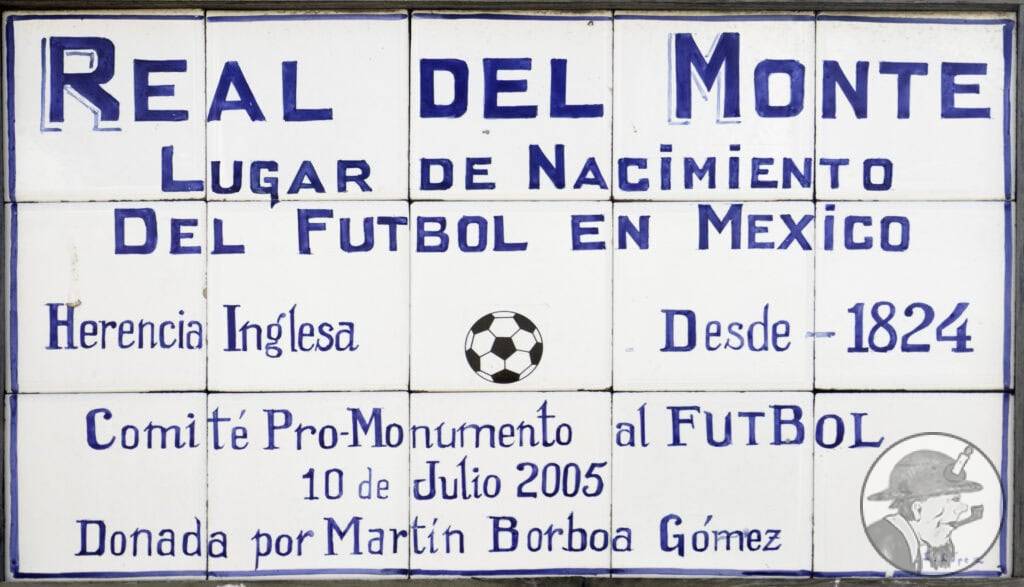
Anyone visiting Real del Monte in Mexico’s state of Hidalgo will undoubtedly have seen the plaque in the main carpark which claims the yard of the Mina de Dolores to be a cradle of football, for a game took place there in 1900 among the ‘English’ miners, most of whom were from Cornwall.
England is widely regarded as the birthplace of modern football as the first official rules of the game were established there in 1863. The country is home to the world’s first football league, the oldest national governing body, and the oldest national knockout competition. By the last quarter of the nineteenth century, football had become popular in working class areas, including in some Cornish mining districts, but it was never as fashionable as rugby (running with the ball) which was closer in form to the ancient Cornish sport of hurling. So, it follows that ‘Los Ingleses’ introduced the sport to Mexico. But why did football rather than rugby take off in the Comarca Minera de Hidalgo, as rugby was far more popular in Cornwall?
Newspaper, the Mexican Sportsman, provides a clue. In 1896 it discussed setting up a league devoted to association football or rugby football. Friendly matches were being played in Mexico City and English schools in Mexico had occasionally played ‘football’, but the sport had not succeeded due to lack of competition. The newspaper favoured the association style of play (soccer) and hence rugby did not take off in Mexico.
Cricket and the birth of the Pachuca Athletic Club
However, football in the Comarca Minera de Hidalgo goes back further than the year 1900 commemorated on the Real del Monte plaque. But Enciso Vargas’s claim in 1889, that a football match was played in Real del Monte in the mid-19th century, is patently false, as football in Britain had yet to develop into a recognisable sport and the Rugby Football Union (RFU) was only founded in 1871. Newspaper reports of rugby being played in Cornish mining communities begin to occur in the mid-1870s. If a game was played amongst the Cornish in Real del Monte as Vargas claims, it was probably some type of hurling match.
The rise of football in the Comarca Minera de Hidalgo is actually closely connected to cricket, a game almost unknown in Mexico, but for many decades it was the main leisure pursuit for the Cornish.
Cricket was popular in Cornwall’s Camborne district, which might account for its popularity in the Comarca Minera de Hidalgo, otherwise known as Mexico’s ‘Little Cornwall’, where a significant number of migrants came from the Central Mining District (Camborne—Redruth—Illogan).
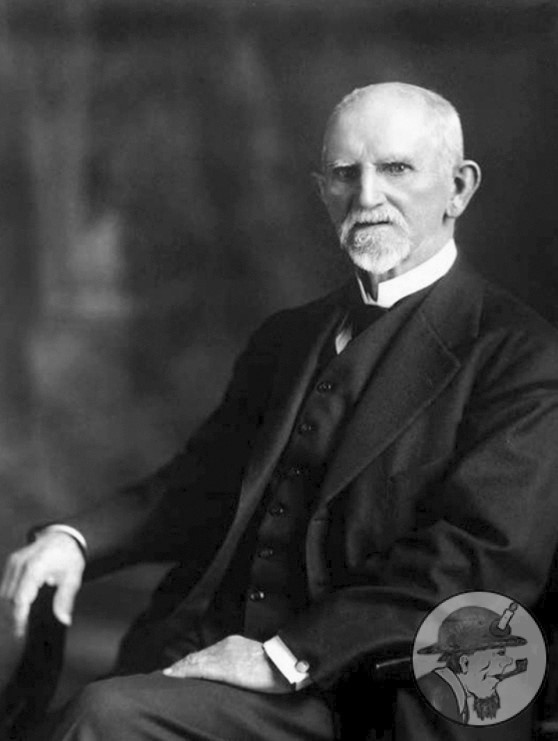
A cricket team was set up by Troon native, Frank Rule, and others in Pachuca in the late-1850s and was soon competing with teams in Real del Monte and Velasco. This activity probably predates the City of Mexico Cricket Club mentioned in 1864. One of my ancestors, Captain John Veall Inch, regularly umpired games.
Cricket prospered during the Porfiriato with the coming of the railway to Pachuca, for teams set up as far away as the City of Mexico, Puebla and Veracruz could now compete in a championship league. Despite a Methodist outcry in 1899 against playing games on a Sunday, the Cornish were responsible for helping to popularise the game in Mexico, with teams challenging each other for the champion cup. Pachuca defeated teams from Puebla, Orizaba and the City of Mexico to win it in 1901.
The game was avidly followed by the Cornish ladies. Carriages left from the main plaza in Pachuca for home games which were, in the early days, played on a ground two miles from town near the pulque farms, most famously Hacienda Cuesco. Local fare, including the famous Hidalguense dish, barbacoa, was consumed with tortillas and washed down with pulque or beer, but in 1891, Cornish pasties were consumed when play stopped for lunch, the first documentary reference to them.
The First Association Football League
It is often claimed that Pachuca had the first soccer team in Mexico, although Orizaba contests this assertion! As early as 1887, the employees of the General Offices of the Central in Mexico City expressed an interest in setting up a football club and in November 1891, a match was played at San Cristobal between ‘Pearson’s Wanderers’ (of the British construction firm S. Pearson & Sons) and the ‘San Cristobal Swifts’. The game was still relatively unknown in Mexico at this point:
“Many of the Swifts had never played at football before, and consequently were at a disadvantage, but they played remarkably well considering that the Wanderers had just returned from a trip to Europe where they had practiced for some months.” Daily Anglo American, 3 November 1891.
The Swifts were defeated one nil. In October 1892, The Two Republics newspaper reported that a football match was being arranged in Mexico City for the inauguration of the Mexican Athletic Club’s ground on the Paseo, ‘the first game between two organised clubs ever played in the vicinity.’
Pachuca was undoubtedly a forerunner in the game, for it already had an established football club by this point, as an amusing and very enlightening letter that appeared in The Two Republics at the close of 1892 from someone writing under the pseudonym, X,Y, Z reveals. In typical Cornish fashion, echoing the rivalry between Camborne and Redruth back home, there had been a schism between the players at Pachuca and those in Real del Monte. The Pachuca Football Club had lately degenerated and was being reorganised:
“This must be attributed to the lack of energy of certain members of the above named body. We may in particular refer to certain so called football players who live in the mountains and who are so egotistical as to imagine that without their mighty efforts the club would not but expire.”
The letter writer concluded by stating that the mountain men should take into consideration the saying ‘Big talkers are generally small doers’.
Indeed, there was more than ‘friendly rivalry’ between players from Pachuca and Real del Monte, as a report a May edition of El Minero de Pachuca of 1889 makes clear. It reported on a football match played between men from the Rosario Mine in Pachuca (captained by Richard Rule) and those from La Joya Mine in neighbouring Real del Monte. The game, played on the sport’s field of the Railway Racetrack in Pachuca had to be abandoned when the referee awarded a penalty to Rosario. The players from La Joya disagreed with his decision and attacked their opponents, causing serious injuries to William Burnets (Bennetts) and Robert Staples. Fourteen people were sent to court for being involved in the brawl.
This interesting article demonstrates that teams from the various mines of Mexico’s Little Cornwall were playing against each other long before games were reported in Mexico City. But how closely they followed the association rules is a matter for debate!
Pachuca’s first organised football squad was built from its cricket team and included William Retallack, Sydney Ludlow, Charles Grenfell (of Pachuca’s Gran Hotel Grenfell), John Mayne Rule, W.C. Rule, and some enthusiastic recent arrivals from Cornwall.
In 1893, Puebla Athletic Club opened their new sports’ ground and hoped to challenge teams in Mexico City and Pachuca to football matches, so they already had a football team by then. The game was growing in popularity and in 1894, Spanish language newspaper El Nacional, explained that football was a team game played with a rubber bladder covered in leather.
In 1895, a meeting was held at Hacienda La Luz in Pachuca to agree on the amalgamation of the Pachuca Cricket Club, the Velasco Cricket Club and the Pachuca Football Club, to create a stronger entity: the Pachuca Athletic Club.
A large field belonging to Hacienda La Luz was given over for a sports field and Frank Rule was elected President of the new club. The team chose as its strip the historical dark and light blue of Oxford and Cambridge with blue shorts, and not the black and white strip stated on Wikipedia.
Besides the Cornish miners, the English and Scots were instrumental in popularising the game in Mexico. English players based in Mexico City, Robert Blackmore and Percy C. Clifford, played a significant role in setting out the rules of play and introducing officials to pitches. Blackmore founded the Reforma Athletic Club which went on to be the most successful in the amateur league, while Clifford founded the British Club. It was said to have been a genuine treat for the lovers of football to watch him play.
The Scots can also lay claim to being highly significant in football’s appeal in Mexico, having also organised a team in Orizaba (state of Veracruz) sometime before 1896. In 1902, several Scottish footballers wanted to organise an Association League, which galvanised interest throughout the expat communities. In 1902 the Liga Mexicana de Football Amateur Association was formed among the English-speaking community.
The teams of the new league were the Reforma Athletic Club, the Mexico Cricket Club, The British Social Club (all three based in Mexico City), the Pachuca Athletic Club and the Orizaba Athletic Club.
A hotly contested international between Scotland and England was also played earlier that year in February on the Reforma Club’s grounds, watched over by the British Consul which England won 3-2. The game between the two ‘auld foes’ was not without controversy, with Scotland claiming the referee, S.H Pope, had made an error that awarded the game to England!! Things were smoothed over by the Reforma Club’s ladies handing out cups of refreshing tea to the weary players after the match.
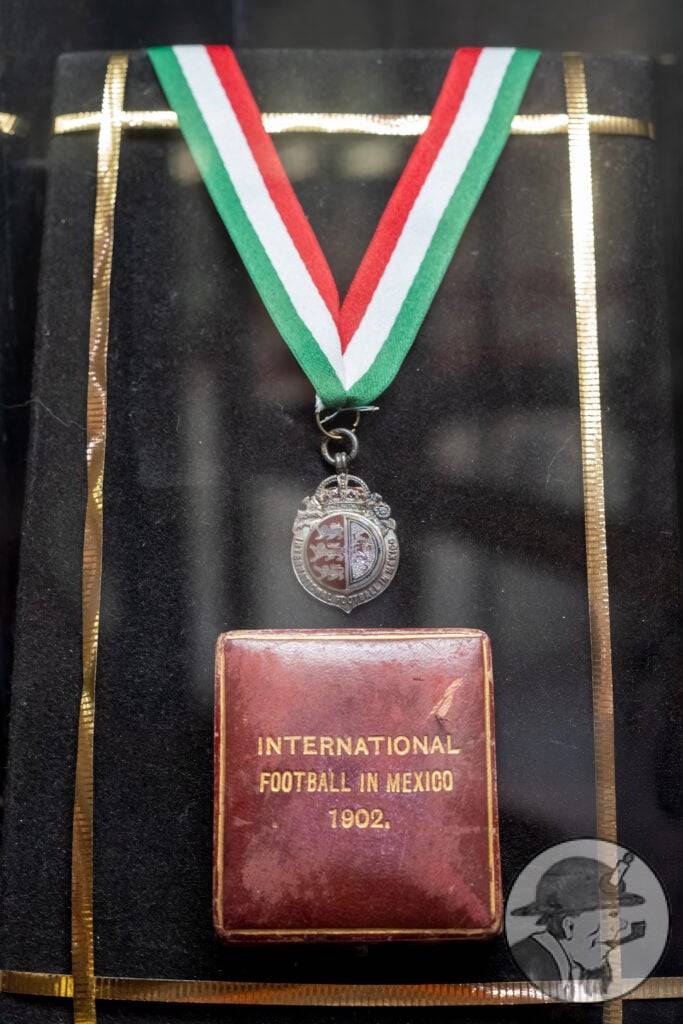
The English team captained by Cowell did not feature any Cornish players, but a commemorative winner’s medal formerly owned by John Mayne Rule, was donated to the Pachuca Football Museum by the late Richard Williams. Rule, who played as a half-back, might have been in the reserves for team England, although his name is not mentioned in press reports.
Pachuca’s first league game was played at the Velódromo Pachuca against the Reforma Athletic Club. The team that was fielded is as follows: J. Larretche (goal-keeper), Richard Sobey (right back), Sydney Ludlow (left back), A.S. Dawe, William Charles Rule and J. Rabling (half backs), W. Bray, Harry Abraham, A. Thomas and J.T. Bennetts (forwards) and J. Mayne Rule was captain. The reserves were R. Jenkin and the Pachuca Methodist minister, the Reverend S. Quickmore.
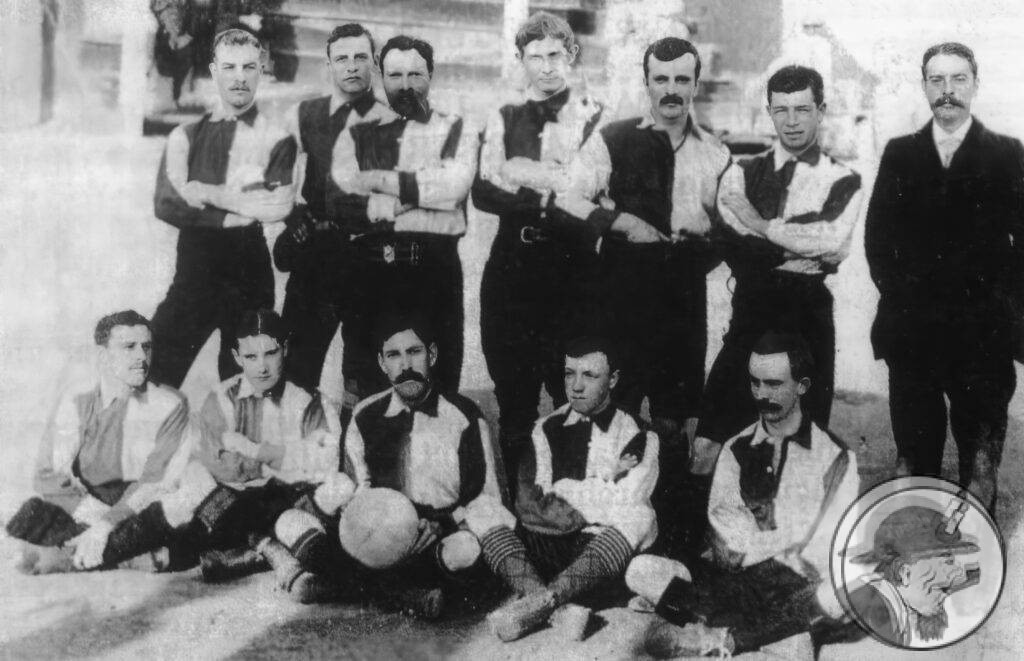
The game, which began at 4.00pm, was well supported and hotly contested, watched intently by the Hidalgo state governor, Pedro L. Rodriguez, and all the principal families of the area. The only drawback was the strong wind that interfered with kicking, which is a common occurrence each afternoon in Pachuca, La Bella Airosa!
“The scene on the ground was made picturesque by the presence of a large number of ladies in most beautiful costumes, many of them wearing the colours of the Pachuca club, dark and light blue.” Mexican Herald, 2 November 1902.
Both teams played ‘with dash’ and the game ended in a tie with three goals apiece. Orizaba won the first league of 1902.
Football also benefitted from improved transport and communication links, with the English language newspaper, The Mexican Herald, publishing upcoming fixtures and devoting column inches to detailed reports of the various matches.
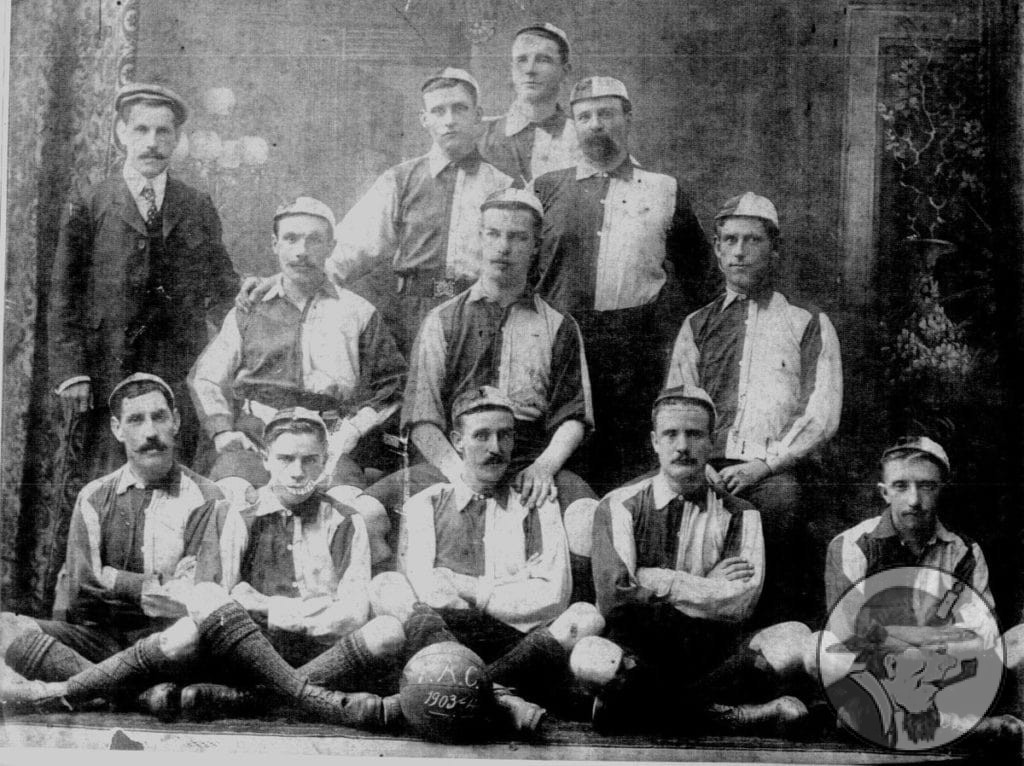
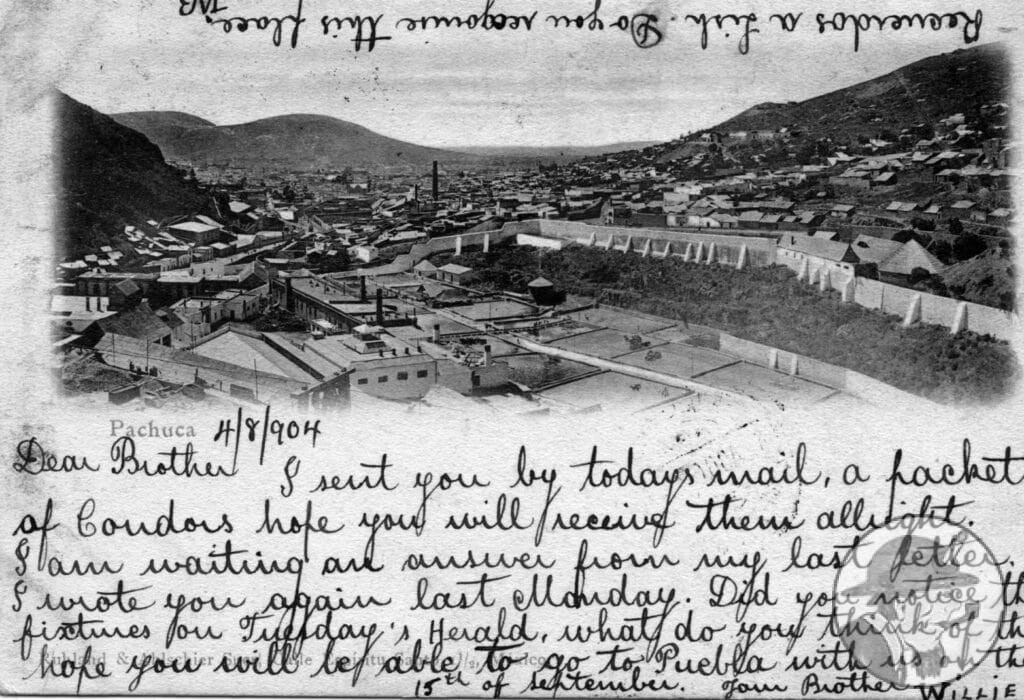
Matches were eagerly followed and awaited. Cornish-Chilean team member, Willie ‘Manco’ Blamey (featured in the above image, back row, second from left), wrote on a postcard of Pachuca’s Hacienda Loreto to his brother Francis, who was working at the Hidalgo Mining and Smelting Company’s Hacienda de Carbajal at Sultepec:
“Did you notice the fixtures on Tuesday’s Herald, what do you think of them? Hope you will be able to go to Puebla with us on the 15th September.”
Pachuca AC won its first amateur title in the 1904–05 season and also won the Copa Tower twice (1907–08 and 1911–12).
Cornish Involvement in the Spread of Mexican Football
Football garnered huge support among the Cornish community in Pachuca and the after-match dinners and smoking concerts of the cricket and football teams provided the context for social mingling, facilitating the entry of the Cornish community into wider Anglo-Mexican society.
Such games were deemed modern, encompassed British cultural imperialism and became fashionable in societies wishing to emulate the British sense of fair play. A far cry from the disparaging comment made about the game in La Voz de México in 1893, which compared the noble bullfighter stepping serenely into the arena to do battle with a wild beast, rather than football players who enter it drunk or very intoxicated to fight with other men and do anything to disable their opponents.
In 1908 the first Mexican, David Islas, was invited to join the Pachuca football team. One of the key players in this era was Alfred ‘Fred’ C. Crowle, born in Pachuca in 1889, the son of Alf Crowle, a Cornish miner from St Blazey. By 1908-9 Crowle was playing senior football for Pachuca and became a master goal-scorer in the Primera Fuerza, heading the goal charts in the 1910-11 and 1914-15 season. He was eventually promoted to team coach and freely admitted Mexicans from all backgrounds to the team, blurring class and ethnic boundaries.
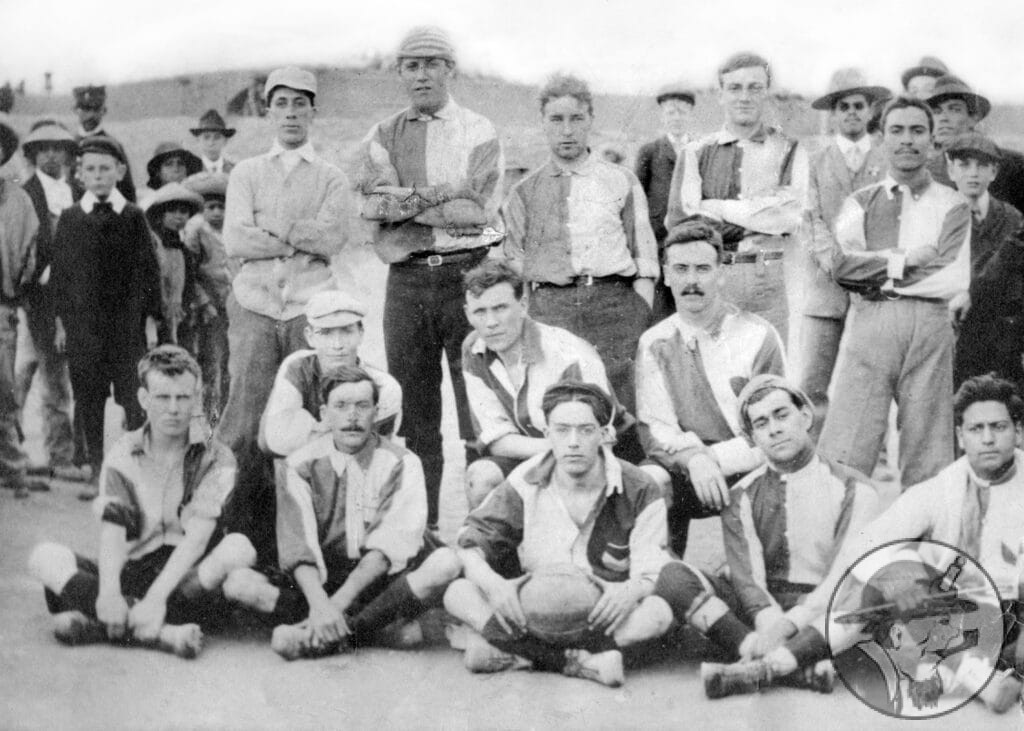
The above photograph shows Back row L-R: Unknown; Percy Bray; Jack Brown; William Pengelly; Jesús Piña. Middle Row L-R, Johnnie Vial (a distant cousin to me); Fred Crowle (Captain); Edgar Rowe. Front Row L-R: Albert Pengelly; D. MacConnell; Fred G. Williams; Davis Islas; Unknown.
By 1915, several of the players were Mexican. The team fielded against España in January 1915 (which ended in a draw) consisted of J. Jenkin (goal), Morcom and Brown (backs), Sollo, Vial and Jáuregui (half-backs), Ortiz, Jenkin, Crowle, Williams and Orozco (forwards).
The team won two more amateur league titles (1917–18 and 1919–20) under player-coach, Fred Crowle. This proud Cornish son of Pachuca later went on to found Club Necaxa before becoming the national coach in 1935. As coach, he enjoyed a one hundred per-cent record in the year he was in charge, his team winning its first ever silverware at the Central American and Caribbean Games in El Salvador.
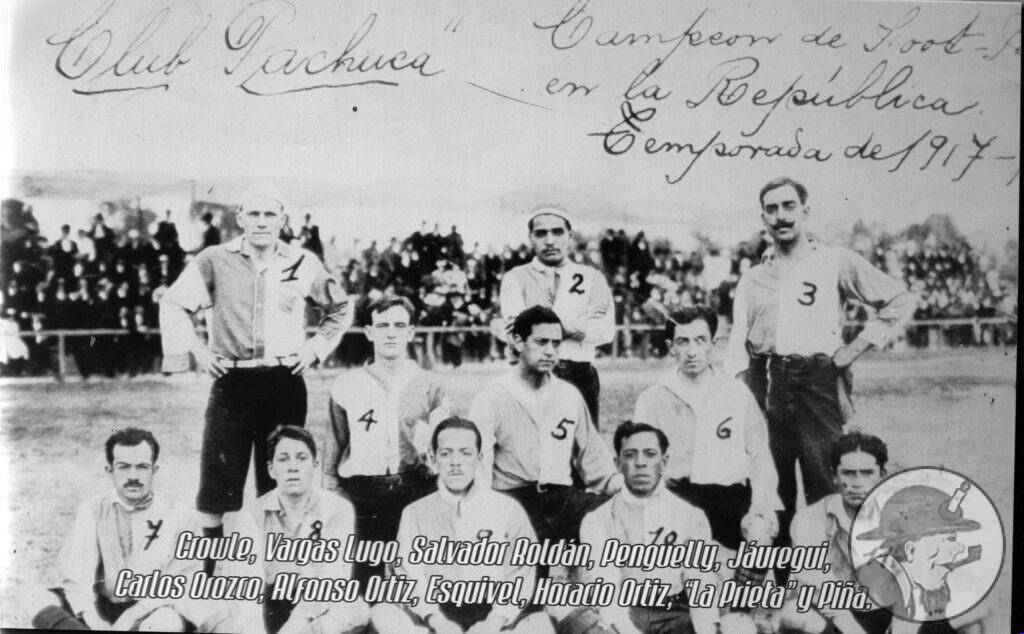
The outbreak of the Mexican Revolution caused many people in Pachuca to move down to Mexico City and by the early 1902s, the club had lost most of its players. Pachuca was invited to participate in the 1921 Centennial Tournament (Torneo Centenario 1921) and also in the Copa Covadonga 1922, which was its last participation in the amateur era, as the club folded.
In 1950 it was revived as one of the founding members of the Segunda División de México, but was dissolved for the second time in 1952 until its re-founding in 1960.
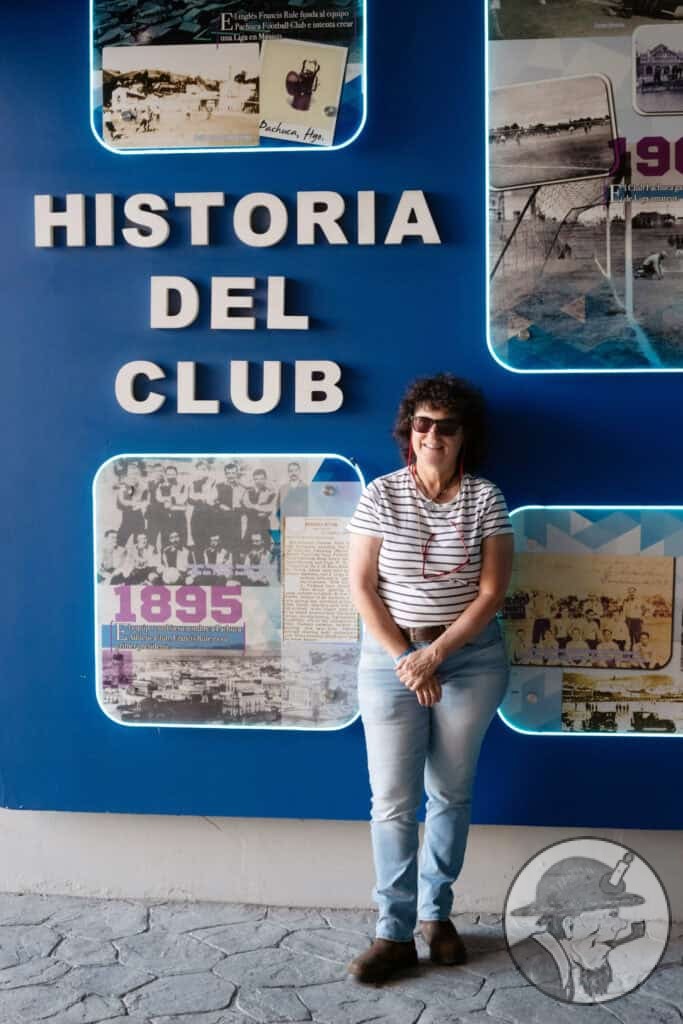
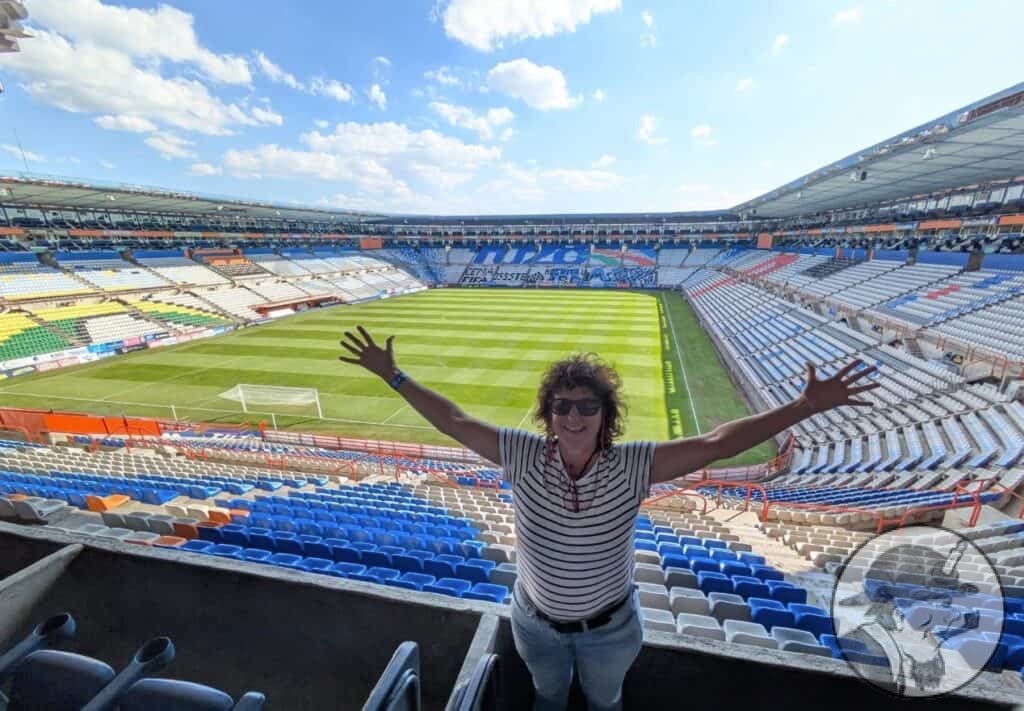
It is indisputable that the Cornish played a significant role in the popularisation of league sport in Mexico, along with the English and Scottish. Los Tuzos are thriving today in Liga MX and Pachuca prides itself on being the birthplace of the beautiful game https://www.mexicosoccer.com.mx/ . To cement this fact, Mundo Fútbol, an interactive museum and hall of fame devoted to the national game was opened in Pachuca in July 2011. It prominently features the history and role of the Cornish community in the beginnings of football in the city and nationwide.
In honour of our Cornish-Mexican links, I will be unfurling my Mexican flag and following ‘El Tri’ with gusto during this year’s World Cup. Viva México! Next time you see La Ola (the Mexican Wave) ripple through a stadium, remember the role that our Cousin Jacks and Jennies played in popularising the beautiful game in Mexico and listen to my podcast interviews.
La Ola! Mexico’s ‘Little Cornwall’, Cradle of Football

Dr. Sharron Schwartz
Specialist in Cornish Mining Migration and transnational communities